
A MostVictorianMurder.
The Mysterious Poisoning of Charles Bravo.
A rich young widow, her devoted companion, a famous doctor old enough to be her grandfather, and a coachman with a grudge. Four months after the wedding, the husband was dead of poison in the spare room. Nobody was ever charged.
On a spring night in 1876, in a Gothic villa called the Priory on the southern edge of London, a young barrister named Charles Bravo is not feeling well.
He has been married four months. The house, the gardens and the staff who keep them were all paid for with his wife’s money, and tonight she has drunk more wine than he allows her and gone up to bed without a word. He has the spare room. It has a roaring fire, which is something.
A little before ten he throws open his door, strides out onto the landing and shouts down the hall for his wife to bring him hot water.
Florence does not stir. She is asleep under the wine. At the foot of her bed sits her companion, Mrs. Cox, knitting, and Mrs. Cox is in no hurry at all.
In three days Florence will be a widow. Again.

I
TheFavorite.
Sydney, Buscot Park and Malvern, 1845 to 1870
Florence Campbell started life as somebody’s favorite. She was born in Sydney in 1845, one of seven children of a merchant who had done very well out of Australian gold, and by every account she was the one he preferred. He brought the family to England and bought Buscot Park, a great country estate. Florence grew up clever, outspoken and rich, with every reason to think life would go on being easy.
For a girl of her class, one thing decided everything, and that was the match. At nineteen she made a good one. Captain Alexander Ricardo of the Grenadier Guards had money and standing to equal her own, and she adored him. She asked whether he might leave the army and stay home to raise a family. He told her the idea was boring.
He found monogamy boring too. Within months there was a woman in the West End and a string of hotel rooms, and when Florence confronted him he barely troubled to look ruffled. Then there was the drinking, which got worse. One night, in the middle of a fight, he hit her in the face three times.
Divorce meant ruin, so her first thought was to mend things. She went to take the waters at Malvern, a fashionable spa town in the hills, hoping to come home restored.
What she found at Malvern was the doctor.

II
BurnThis.
Malvern, 1870 to 1872
Dr. James Gully was the most celebrated physician in the town, a pioneer of the water cure whose patients included Charles Darwin, Charles Dickens and Florence Nightingale. He was also married, though he and his wife had lived apart for decades, and he was thirty-seven years older than his new patient.
He saw what the marriage was doing to her and gave advice that was close to unheard of: leave him. He said the same to her parents. Then he fell in love with her, and she with him.
Florence went home and began divorce proceedings. She never had to finish them. In April 1871 word came from Cologne that Captain Ricardo had been found dead after a drinking bout, vomiting blood, in another woman’s rooms. He had never changed his will.
She and the doctor were hopeless at secrets. A maid walked in on them, and Florence sent her a letter, half bribe and half plea, that would one day be read out as evidence. It ended with two words in capitals.
I hope you will never tell anyone of what happened in Malvern. It is all buried in the past.
Burn this.
Then, in May 1872, a host came home early from a walk and found the two of them on the drawing room sofa, going at it, as Julian Fellowes has put it, “hammer and tongs.” Word got out. To save their own standing, her parents cut off the favorite daughter.

III
My PresentFreedom.
The Priory, Balham, 1872 to 1875
Cast out, Florence did what almost no woman of her time could do. She set up on her own.
She took the Priory, a battlemented Gothic villa in Balham with lawns, hothouses and stables, and filled it with gardeners, maids and grooms for the horses she loved. Dr. Gully gave up his practice and took a house down the road. And she hired a companion.
Jane Cox was a widow with three sons to school, back from Jamaica with debts and working as a governess. She became something between a big sister and a mother to Florence. People called her Florence’s shadow. Nothing happened at the Priory that Mrs. Cox did not know about.
There was nobody left on earth whose permission Florence needed for anything. In a letter she had a name for it: “my present freedom.”
It did not last. Traveling in Germany with Gully she became pregnant. A child would have finished them both, and the doctor ended the pregnancy himself. It went badly. When she had recovered she was nearing thirty, cut off from her family, afraid she might never have children, and in love with another woman’s husband, who was also somebody’s grandfather.
She ended it. Gully was heartbroken. In time he gave her his blessing.

IV
A SuitableMan.
Kensington, December 7, 1875
There was one road back to respectability, and it ran through a husband.
It was Mrs. Cox who produced him. Charles Bravo was a friend of her family: thirty, the same age as Florence, handsome, an Oxford man and a barrister, the stepson of a prosperous merchant. He had less money than Florence and a good deal less standing, and he pursued her hard.
She told him everything first. The first marriage, the doctor, by some accounts even the pregnancy. Charles said the past was the past, and confessed that he had a small daughter by a woman he supported. Then he named his terms. She would never see Gully again, or speak of him. In return, he would never again see his own child.
She agreed. Then she wavered. People were already calling Charles a fortune hunter, and she wrote to him.
Before giving up my present freedom, I must be quite convinced that it would be for both of our mutual happiness.
The wedding was not put off. It was brought forward. On December 7, 1875, in Kensington, Florence gave up her present freedom.

V
Man ofthe House.
The Priory, winter and spring, 1876
The marriage lasted four months, and in that time Charles Bravo handed a motive to nearly everyone under his roof.
He started with the roof. Florence had kept her fortune in her own name, and Charles wanted the Priory put in his. He would not, he said, live as less than the man of his own house. Then he took over the accounts. There were too many servants, he decided, and they were paid too well. A maid went. He suggested putting down one of her horses to save the expense. And he sacked her coachman, George Griffiths, whose wife was about to have a baby.
Griffiths went about saying Mr. Bravo would be dead within months.
Tartar emetic is a salt of antimony. Grooms kept it for the horses. It dissolves in water without color or taste.
Anonymous letters came, calling Charles a man who had married for money. He decided that Gully had written them and that his wife was still seeing him. She was not. He raged anyway. He threatened again and again to walk out. He sat smoking in her sickroom when the smoke made her worse. At dinner he would announce that she had had enough wine, and tell the servants so.
What he wanted most was an heir. Florence miscarried in January and again in April, and by her account he would not leave her alone even then. He forced himself on her while she was still recovering. The law of 1876 had no word for that inside a marriage. We do.
A doctor ordered bed rest and sent Charles to the spare room. Mrs. Cox, whose own place Charles now meant to cut, moved into Florence’s bedroom to stand guard.
One more thing. In the month before the end, Mrs. Cox and Dr. Gully met on the train to town five times. By chance, they both said. On one of those journeys the doctor offered something to help Florence sleep, and sent it to Mrs. Cox’s own lodgings, not to the Priory. Asked later where the bottle was, she said Florence hadn’t needed it, so she threw it away.

VI
HotWater.
Tuesday, April 18, 1876
On Tuesday, April 18, the bed rest ended. That night Charles was to move back into his wife’s room.
He spent the afternoon on horseback, against advice, and the horse bolted with him for miles. He came home aching, slept in a chair, and went in to dinner with a sore back, a toothache and a letter from his stepfather scolding him for losing money on the stock market. He was short with both women. Florence drank steadily through his objections, went up early, and sent down for more wine twice, first by Mrs. Cox and then by her maid, Mary Ann Keeber.
Beside Charles’s bed, as on every night, stood a jug of water. He always drank from it before he slept.
Here is the part the hosts could not get over. Tartar emetic had a quiet household use. Slipped into a drink in small doses, it made a person sick: a drinker too sick to drink, or a husband too sick to come to bed.
The house went quiet. Then the spare room door flew open, and Charles was on the landing shouting for Florence and for hot water.
Mary Ann heard him. Florence slept on. So the maid fetched Mrs. Cox, who came at once by her own account. By Mary Ann’s, she had sat knitting through the shouting and was in no great hurry even then. They found Charles at his window, vomiting into the night. He called once more for his wife and for hot water, and fainted.

VII
SixDoctors.
April 18 to 21, 1876
Mrs. Cox took charge. She sent for a doctor, though not, the maid noticed, the nearest one. By the time he arrived the nightshirt and the sheets had been changed and the basin washed. A stain she was still mopping up, she explained, was red wine. When the doctors asked for anything he had brought up, she said she had cleaned it all away, though she knew there was more on the roof below his window.
Her story moved as the doctors multiplied.
She does not know what he has taken.
Before he fainted, Charles told her he had taken poison himself.
It was chloroform.
He has taken poison. Please don’t tell Florence.
The trouble was that Charles was still alive and, on and off, talking. Six doctors came to the Priory in three days. They gave him morphine for the pain, and cold milk and champagne for his stomach.
They asked him again and again what he had swallowed. A little laudanum for the toothache, he said, and nothing else. “If it wasn’t laudanum, so help me God, then I don’t know what it was.”
Strangest of all, he never seemed surprised to have been poisoned. And he never accused anyone.

VIII
The BalhamMystery.
Extraordinary Disclosures.
Twenty-three days at the Bedford Hotel.
The post-mortem named the weapon: tartar emetic, enough to stop his heart. Detectives thought at once of the water jug. Then they found a chemist with a receipt, and the name on it was George Griffiths, the coachman who had foretold the death. For a moment it looked finished. But Griffiths had been gone from the Priory for months, and what he bought had sat in an unlocked stable where anybody could help themselves.
A first inquest sat within the week. Florence was not called. Nobody pressed Mrs. Cox on her changing story. The jury returned an open verdict, which is a jury’s way of saying it does not know.
Charles’s family would not have it. In July a second inquest opened at the Bedford Hotel, a short walk from the house. It ran for twenty-three days and heard forty witnesses, and the papers called it the Balham Mystery.
One doctor testified that, hours into that first night, he had poured himself a drink from the jug by the bed and felt nothing. So either the water was never poisoned, or somebody had emptied the jug and filled it again. Under oath, nobody had seen anybody touch it.
The rest was Florence. Her years with Gully were laid out in open court, on a day when women and children were kept out of the room for their own protection. The old doctor was questioned as a suspect and left disgraced. And Mrs. Cox, sensing where the room was looking, let go of the suicide story and began to point at her mistress.
The verdict.Wilfully murdered by the administration of tartar emetic; but there is not sufficient evidence to fix the guilt upon any person or persons.
No one was ever charged.

IX
PersonsUnknown.
Southsea, September 1878
The verdict cleared nobody, and the three of them lived out their lives inside it.
Mrs. Cox lost her place and her closest friend, and kept out of sight for the rest of a long life. Dr. Gully’s good name never came back. He was dead within seven years. Florence left the Priory, the house she had fought so hard to keep, took the surname Charles had been born with, and moved to the south coast. She drank. On September 17, 1878, after a bout of vomiting blood, she died. She was thirty-three.
That makes three. A first husband, a second husband and the wife they had in common, each dead after vomiting blood.
Her will held a surprise. As Jessie tells it, Florence left money to all three of Jane Cox’s sons, and to a granddaughter of James Gully, a little girl who was also named Florence. The companion who turned on her in court and the lover who cost her everything were both remembered, through their children.
Was that forgiveness? Or was it thanks?

X
Who PoisonedCharlesBravo?
A hundred and fifty years of people have had a go at it.
- 1
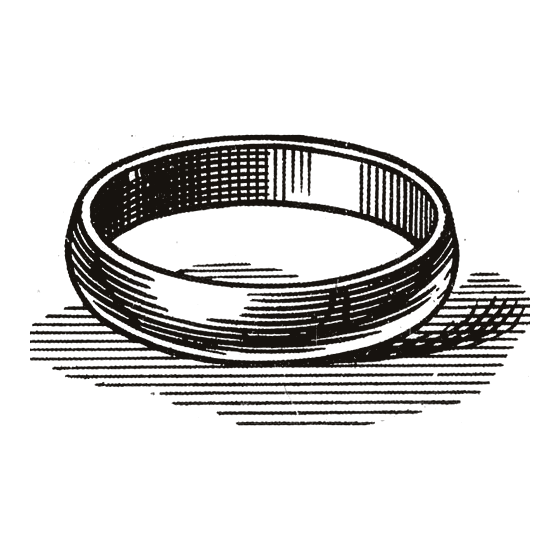 The Wife.
- 2
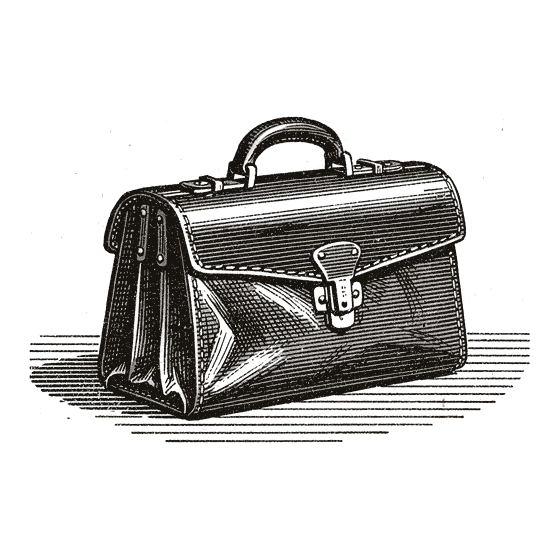 The Doctor.
- 3
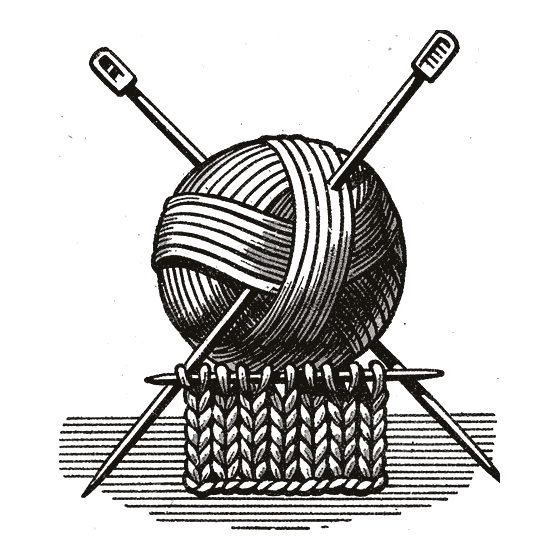 The Companion.
- 4
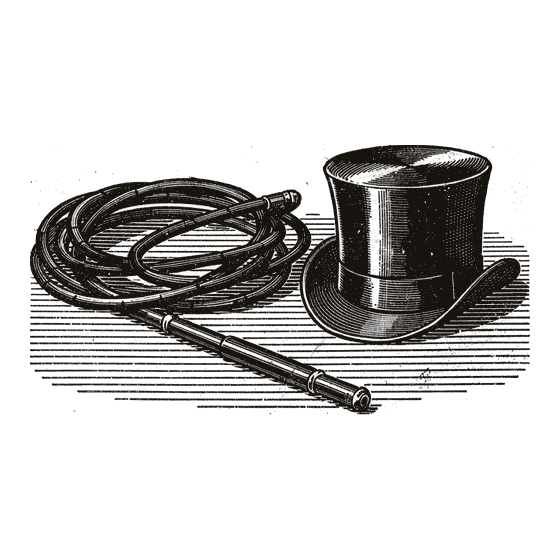 The Coachman.
Agatha Christie
The doctor and the companion.
Gully supplied the poison and Mrs. Cox put it in the jug, with Florence kept in the dark for her own sake. Those meetings on the train were no accident.
James Ruddick
The wife, with help.
The author of the episode’s main source spent years tracking down the descendants. His answer: Florence, facing pregnancies that might kill her, dosed the water, and Mrs. Cox cleaned up after her.
Julian Fellowes
Charles killed Charles.
He had been slowly poisoning Florence for her money, and that night, sore and distracted, he took his own antimony by mistake. It would explain why he never named anyone.
Jessie
All three of them.
Florence, Mrs. Cox and Dr. Gully together. The will was her thank-you.
Andie
Florence. Twice.
The wife with help, and she thinks the first husband was poisoned too.
Trust
your gut.
Trust your gut when it comes to love, so no one ends up poisoned by antimony.
Jessie & Andie · Hear the whole episode